

10 Fun and Educational Daycare Activities for Kids
The best daycare activities combine play with foundational skill-building in movement, communication, creativity, and problem-solving. At Sugar N Spice Day Care & Kindergarten, thoughtfully planned activities like arts and crafts, outdoor exploration, storytelling, and early math games keep children engaged while naturally supporting their early childhood development.
Rather than relying on rigid, formal lessons, quality daycare programs weave learning directly into everyday play, conversation, repetition, and hands-on exploration.
Activities such as arts and crafts, outdoor exploration, puzzles, storytelling, simple science experiments, imaginative play, and early math games give young children different ways to discover the world around them. Some encourage movement and coordination. Others invite communication, creativity, problem-solving, or cooperation.
The best activities do not need to feel like formal lessons. For young children, learning often happens through play, conversation, repetition, movement, and hands-on exploration.
Below are 10 fun and educational daycare activities that can help keep children engaged while giving them opportunities to practice a variety of early skills.
What Are Good Daycare Activities for Young Children?
Good daycare activities give children opportunities to move, create, communicate, solve simple problems, and explore through play. A balanced day can include creative projects, outdoor activities, puzzles, storytelling, early math games, imaginative play, and hands-on discovery.
The goal is not to turn every activity into a formal lesson. Young children often learn best when they can participate, experiment, repeat, ask questions, and interact with the people and environment around them.
10 Daycare Activity Ideas at a Glance
Daycare Activity | What Children Can Practice |
Arts and crafts | Creativity, hand coordination, and self-expression |
Outdoor exploration | Movement, observation, and curiosity |
Puzzles | Problem-solving, focus, and spatial awareness |
Play-dough and fine motor activities | Hand strength, coordination, and control |
Simple science activities | Observation, questioning, and cause-and-effect thinking |
Storytelling | Language, listening, and imagination |
Early math games | Counting, sorting, matching, and pattern recognition |
Imaginative play | Communication, cooperation, and creative thinking |
Scavenger hunts | Observation, movement, and following directions |
Letter recognition games | Familiarity with letters, sounds, and early language concepts |
Each activity can be adjusted based on a child’s age, interests, and individual development.
Want to see how our play-based curriculum can benefit your child? Schedule a tour with Sugar N Spice Day Care & Kindergarten today or call us at (205) 822-8581 to speak with our educators.
1. Creative Arts and Crafts for Daycare
Arts and crafts give young children a direct, hands-on way to explore colors, shapes, and textures while practicing essential fine motor skills. At Sugar N Spice Day Care & Kindergarten, creative art sessions focus on process-driven exploration rather than rigid templates, encouraging self-expression and decision-making from an early age.
Materials can include crayons, washable paint, paper, glue sticks, stickers, paper plates, and child-safe scissors, depending on the activity and appropriate supervision.
For example, children might paint a picture, decorate a paper plate, combine different materials into a collage, or experiment with mixing colors. There does not have to be one “right” finished product. Giving children choices about what they make encourages exploration and lets them express their ideas through art.
Arts and crafts also give children opportunities to practice small hand movements as they hold crayons, use paintbrushes, tear or cut paper, place stickers, and glue pieces together.
Learning Focus: Creativity, self-expression, hand-eye coordination, and fine-motor practice.
2. Outdoor Activities and Nature Exploration
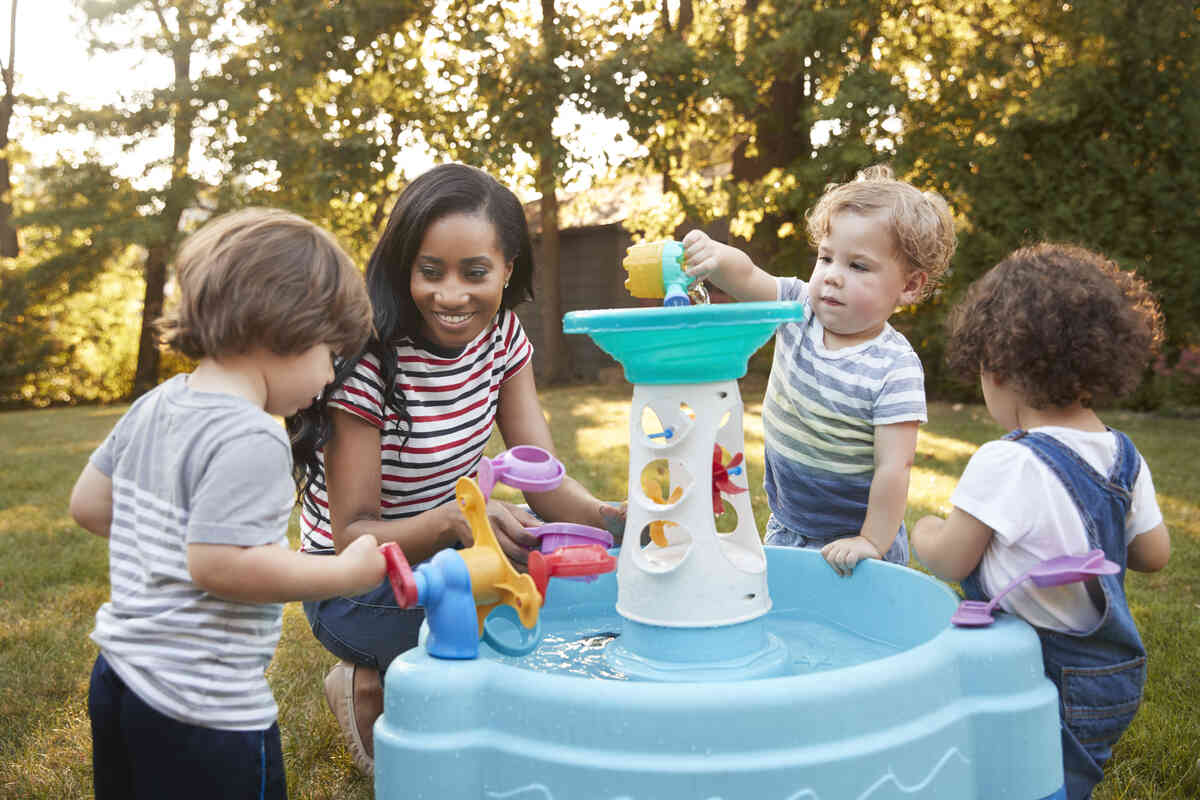
Outdoor play gives young children space to move, observe, and explore their surroundings. Activities such as nature walks, playground games, chalk drawing, gardening, or simple outdoor searches can turn everyday time outside into hands-on discovery.
Materials might include buckets, magnifying glasses, sidewalk chalk, small nets, or child-sized gardening tools, depending on the activity and level of supervision.
A simple nature walk, for example, can encourage children to notice leaves, rocks, flowers, insects, colors, and changing weather. Adults can ask questions such as, “What do you notice?” or “Can you find something smooth, rough, big, or small?” to encourage observation and conversation.
Outdoor activities can also give children opportunities to practice larger movements such as walking, running, climbing, balancing, bending, and reaching. At the same time, exploring nature encourages curiosity about the world around them.
Learning Focus: Movement, observation, curiosity, coordination, and exploration.
3. Puzzles and Problem-Solving Games
Puzzles give young children a simple way to practice thinking through a challenge one step at a time. Matching pieces, sorting objects, completing patterns, and solving age-appropriate puzzles can encourage focus, patience, and persistence.
Activities can include wooden puzzles, matching cards, shape sorters, simple mazes, stacking challenges, or picture-based problem-solving games. The difficulty can be adjusted based on the child’s age, interests, and comfort level.
Adults can support the activity by asking questions such as, “What piece do you think fits here?” or “What could you try next?” These prompts encourage children to think through possibilities without taking over the task.
Problem-solving activities can also help children practice spatial awareness, memory, decision-making, and the ability to stay with a task when the answer is not immediately obvious.
Learning Focus: Problem-solving, focus, persistence, memory, and spatial awareness.
4. Play-Dough and Fine Motor Activities
Play-dough and other hands-on activities give young children plenty of opportunities to use the small muscles in their hands and fingers. Rolling, squeezing, pinching, shaping, picking up, and placing objects can turn fine-motor practice into enjoyable play.
Activities can include shaping play-dough, threading large beads, stacking blocks, placing pegs, sorting small objects with child-safe tongs, or tearing and crumpling paper. Materials and activities should always be appropriate for the child’s age and used with suitable supervision.
With play-dough, children can roll balls, make shapes, create pretend food, form simple letters, or use child-safe tools to press patterns into the dough. Adults can encourage exploration with questions such as, “What can you make?” or “What happens when you roll it, flatten it, or squeeze it?”
These activities give children opportunities to practice hand-eye coordination, finger control, and using both hands together while they create, sort, build, and explore.
Learning Focus: Fine-motor practice, hand-eye coordination, finger control, creativity, and concentration.

5. Simple Science Experiments for Young Children
Simple science activities give young children opportunities to observe what happens, ask questions, make predictions, and explore cause and effect through hands-on play. The activity does not need to be complicated to encourage curiosity.
Examples can include mixing colors, experimenting with objects that sink or float, watching ice melt, exploring magnets, or observing how water interacts with different materials. Activities and materials should always be age-appropriate and used with suitable adult supervision.
Adults can make these experiences more engaging by asking simple questions before, during, and after the activity. Try asking, “What do you think will happen?” “What changed?” or “Why do you think that happened?” The goal is to encourage children to notice, describe, and think about what they see.
Even when children do not know the scientific explanation, experimenting gives them a chance to explore ideas, compare results, and discover that asking questions can be part of learning.
Learning Focus: Observation, curiosity, questioning, prediction, and cause-and-effect thinking.
6. Storytelling and Language Activities
Storytelling gives young children opportunities to listen, imagine, describe ideas, and take part in conversations. Reading books together, making up stories, using puppets, or talking about pictures can turn language practice into an engaging shared activity.
Activities can include picture books, story cards, puppets, felt boards, rhyming games, or simple “what happens next?” prompts. Children can also be encouraged to retell a familiar story in their own words or create a new ending.
Adults can support language development by asking open-ended questions such as, “What do you think is happening?” “How do you think the character feels?” or “What would you do next?” These questions encourage children to explain their thinking and participate in the story.
Storytelling activities also give children opportunities to practice listening, taking turns in conversation, learning new words, and expressing ideas through words and imagination.
Learning Focus: Listening, communication, vocabulary exposure, imagination, and conversational skills.
7. Early Math Games
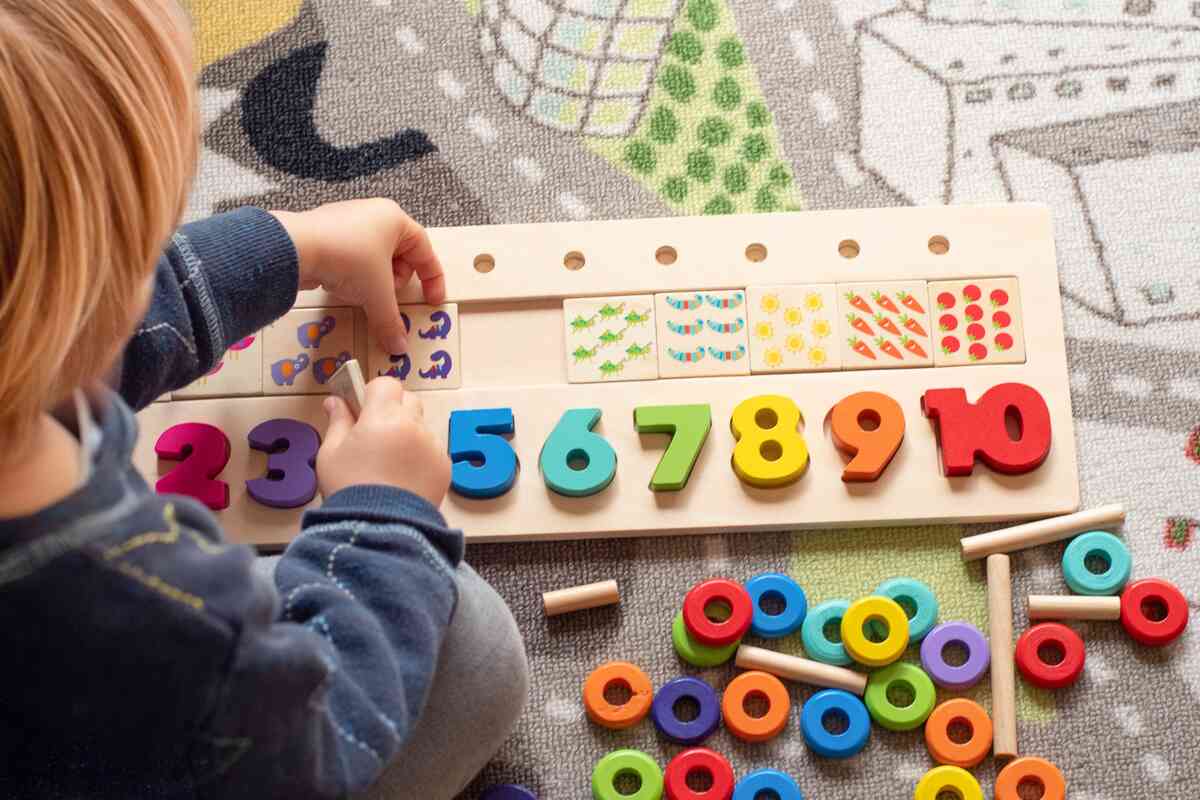
Early math activities help young children become familiar with numbers, patterns, shapes, sizes, and simple comparisons through play. These concepts can be introduced naturally with everyday objects, movement, and hands-on games.
Activities can include counting blocks, sorting objects by color or size, matching shapes, creating simple patterns, comparing which group has more or less, or using number cards during play. The activity can be adjusted based on the child’s age, interests, and comfort level.
Adults can encourage thinking by asking questions such as, “How many do you see?” “Which one is bigger?” “Can you find another shape like this?” or “What comes next in the pattern?” These questions help children notice relationships and explain what they observe.
Early math games give children opportunities to practice counting, sorting, matching, comparing, recognizing patterns, and becoming more comfortable with basic number concepts.
Learning Focus: Counting, sorting, matching, patterns, shapes, comparison, and early number awareness.
8. Imaginative Play and Role-Playing
Imaginative play gives young children space to explore ideas, act out familiar situations, and create stories through play. Pretending to run a store, cook a meal, care for a doll, visit a doctor, or build a make-believe world can turn everyday experiences into meaningful learning opportunities.
Materials can include dress-up clothes, dolls, toy food, play phones, blocks, kitchen sets, puppets, or other simple props that encourage children to create their own scenarios.
Adults can support role-playing by joining the conversation without controlling the story. Questions such as, “What happens next?” “Who are you pretending to be?” or “What does your character need?” can encourage children to explain their ideas and keep the play going.
Imaginative play also gives children opportunities to practice communication, cooperation, turn-taking, problem-solving, and expressing thoughts or feelings through pretend situations.
Learning Focus: Imagination, communication, cooperation, turn-taking, and problem-solving.
9. Scavenger Hunts for Young Children
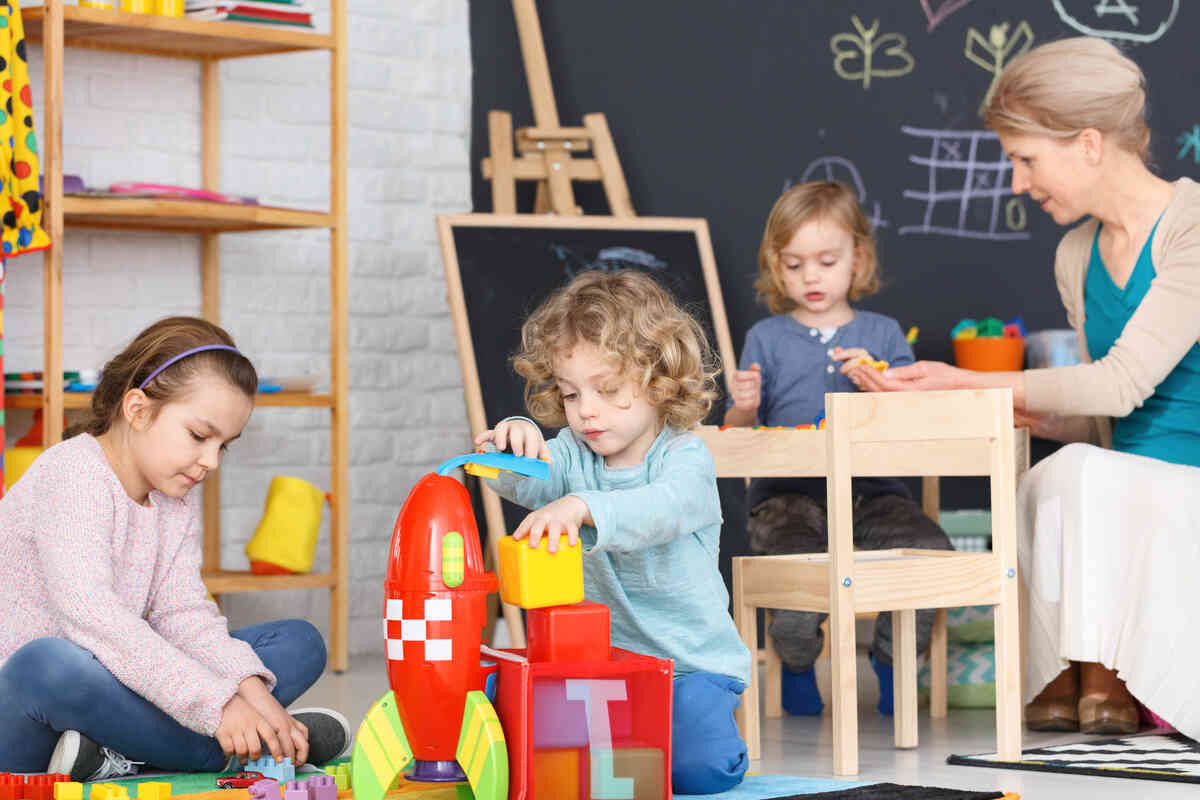
Scavenger hunts turn searching and exploring into an interactive activity for young children. Children can look for specific colors, shapes, objects, pictures, or items in their surroundings while following simple clues or directions.
A scavenger hunt can take place indoors or outdoors and does not require complicated materials. Adults might ask children to find something red, spot three different shapes, look for an object that feels soft, or search for items pictured on a simple checklist. Activities should be adapted to the child’s age and the environment.
Adults can encourage observation by asking questions such as, “What do you notice?” “Where else could we look?” or “What helped you find it?” Children can also work together, take turns finding items, or talk about what they discover along the way.
Scavenger hunts give children opportunities to practice observing details, following directions, moving through their environment, solving simple problems, and cooperating with others.
Learning Focus: Observation, following directions, movement, problem-solving, and cooperation.
10. Letter Recognition Games
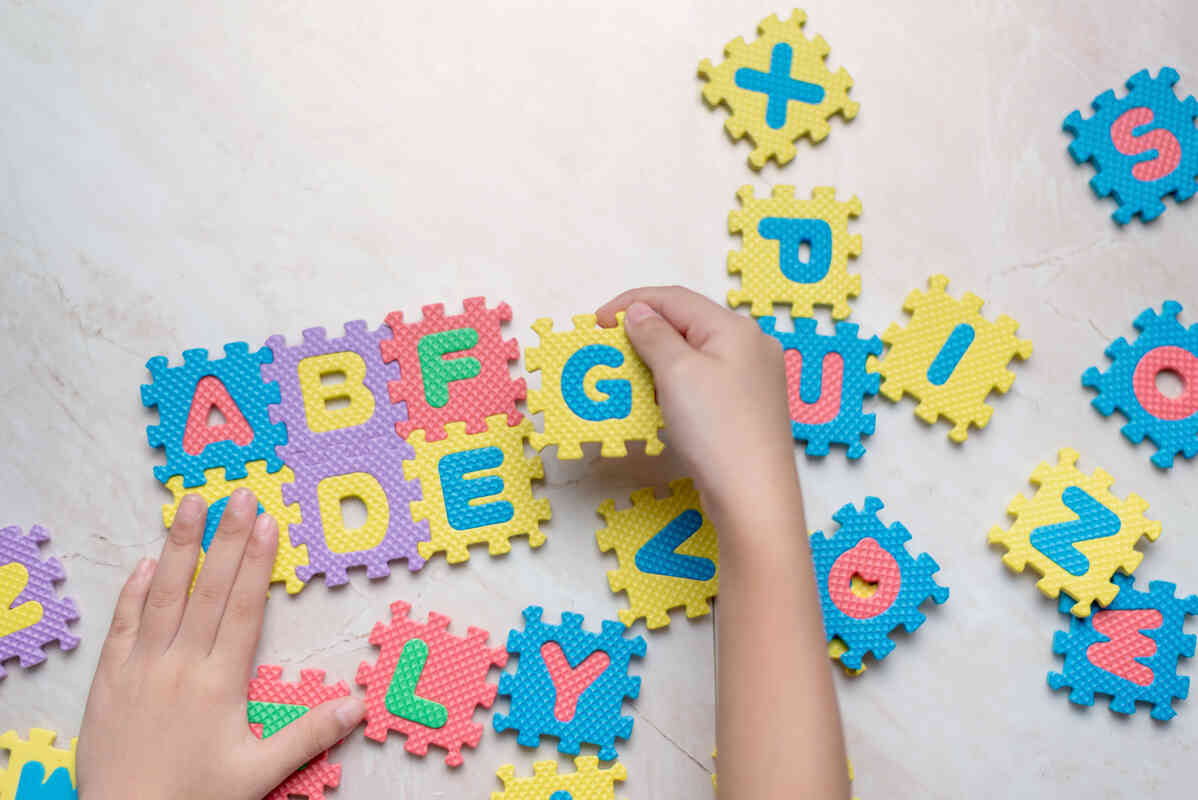
Letter recognition games give young children playful opportunities to become more familiar with letters, their shapes, and the sounds they can represent. Instead of relying only on worksheets, letters can become part of hands-on games, stories, songs, and everyday exploration.
Activities can include matching uppercase and lowercase letters, finding letters in books or around the room, sorting magnetic letters, tracing letter shapes, or searching for objects that begin with a particular sound. Activities can be adjusted based on each child’s age, interests, and familiarity with letters.
Adults can encourage participation with prompts such as, “Can you find the first letter in your name?” “Which letters look alike?” or “What sound do you hear at the beginning of this word?” Keeping the activity playful gives children room to explore without turning every correct answer into a test.
Letter games can give children opportunities to notice letter shapes, hear and experiment with sounds, expand their vocabulary, and become more comfortable interacting with printed words.
Learning Focus: Letter recognition, sound awareness, vocabulary exposure, visual matching, and early language exploration.
Frequently Asked Questions About Daycare Activities
What are good daycare activities for young children?
Good daycare activities give children opportunities to move, create, communicate, explore, and solve simple problems through play. Examples include arts and crafts, outdoor exploration, puzzles, storytelling, early math games, imaginative play, scavenger hunts, and letter recognition activities.
Do you incorporate these activities into daily schedules?
Yes. At Sugar N Spice Day Care & Kindergarten, we weave arts, science, outdoor exploration, and early math into structured daily routines so that learning feels natural, engaging, and balanced rather than forced or stressful for young children.
How do daycare activities support early learning?
Daycare activities can support early learning by giving children opportunities to practice skills through hands-on experiences. Depending on the activity, children may practice communication, coordination, observation, problem-solving, counting, turn-taking, creativity, or following directions.
What are some good indoor daycare activities?
Indoor daycare activities can include puzzles, arts and crafts, play-dough, storytelling, matching games, simple science activities, imaginative play, sorting activities, and letter recognition games. These activities can be adjusted based on the child’s age, interests, and comfort level.
What are some good outdoor daycare activities?
Outdoor daycare activities can include nature walks, playground games, chalk drawing, scavenger hunts, gardening, movement games, and simple observation activities. Outdoor play gives children opportunities to move, explore their surroundings, and notice what is happening around them.
How can daycare activities keep children engaged?
Activities are often more engaging when children can participate, make choices, move, explore materials, ask questions, and interact with others. Variety also matters. Combining creative, physical, language, problem-solving, and imaginative activities can give children different ways to take part throughout the day.
How can parents continue these activities at home?
Parents can adapt many daycare activities using simple materials at home. You might read a story together, go on a short nature walk, sort household objects by color, build with blocks, draw pictures, count items during everyday routines, or create a simple scavenger hunt. The activity does not need to be complicated to create an opportunity for conversation and exploration.
See What Learning Through Play Can Look Like at Sugar N Spice
The right daycare activities can give young children opportunities to explore, create, communicate, move, and practice new skills through everyday play.
For parents, understanding what happens during the day matters too. You want to know your child is spending time in an environment where care, learning, curiosity, and connection are part of the experience.
At Sugar N Spice Day Care & Kindergarten, our mission is centered on compassionate care, playful learning, creativity, and supporting each child’s individual journey.
If you are exploring daycare or early learning options for your child, the next step is simple.
If you’re interested in learning more about how we keep kids happy and engaged at Sugar N Spice, or if you have any questions about our programs, call us at (205) 822-8581. We’d be delighted to share more about our exciting daycare activities and how they benefit your child’s growth and learning.