

Family Owned and Operated
for 40+years
At Sugar N Spice Daycare and Kindergarten, we recognize that every child is different. Because of this, we go above and beyond to ensure your child receives one-on-one assistance in all early learning activities. We also have an open-door policy for all early learning programs, which means that our phenomenal teachers will keep you updated on your child’s achievements and milestones every step of the way.
CLASSES
Our classes are carefully crafted to meet the development needs of the each and every child. Our educators and support staff are dedicated and thoroughly trained.
Infant Care
Learn more about our infant day care. Under our care, your child will not only develop crucial life skills but also receive the dietary and lifestyle changes needed to stay happy and healthy.
Early Learning
Discover why early learning programs are so important for your child. Whether your child is 6-weeks-old or just entering kindergarten, there’s a place for them at our child care center.
Preschool
Prepare your child for school by enrolling them in a preschool education program. We follow Alabama’s state guidelines to ensure your child for kindergarten readiness
MEET THE TEACHERS
“Our children are our living letters to the world.”- Margaret Mead
Stay in the know with
Our Blogs and Resources

The Science of Snuggles: How Affection and Attachment Support Infant Brain Development
When a baby fusses and is held close, their nervous system begins to settle. Early development research shows that these responsive back-and-forth interactions actively shape brain architecture while building emotional and social security.
Your baby starts to fuss. You pick them up, hold them close, and speak softly. Within moments, their body begins to settle.
It feels like a simple act of comfort. But those small, responsive interactions matter. Early development research shows that back-and-forth exchanges with caring adults help shape brain architecture and support emotional and social development.
Attachment grows through these repeated moments of connection. A cuddle after a cry. A smile returned. A familiar voice during a diaper change. Over time, babies begin to learn that the people around them are responsive, dependable, and safe.
That doesn’t require perfect parenting or constant physical contact. What matters is a consistent pattern of warm, attentive care from the trusted adults in a baby’s life.
Understanding infant attachment and brain development helps explain why these everyday moments carry so much developmental weight.

What Is Infant Attachment?
Infant attachment is the emotional bond that forms through consistent, daily caregiving, establishing whether adults are dependable and safe. Practicing responsive parenting and attachment builds confidence in infants that comfort is available whenever needed.
It develops between a baby and the people who care for them consistently. Through repeated everyday interactions, babies begin to learn whether those adults are available, responsive, and safe to depend on. Understanding responsive parenting and attachment can help caregivers nurture this relationship.
Secure attachment doesn’t mean a baby is always calm or never cries when a caregiver leaves. It means the baby develops confidence that comfort and support are available when needed.
What Does Secure Attachment Look Like?
Secure attachment can show up in simple, recognizable ways. A baby may seek out a familiar caregiver when upset, settle with reassurance, or look back toward that person while exploring something new.
That sense of security can give babies more confidence to engage with the world around them. When they know a trusted adult is nearby, they have a stronger foundation for exploring, playing, interacting, and learning.
Attachment Is Built Through Everyday Moments
Attachment usually grows through ordinary routines, not dramatic moments. Feeding, diaper changes, eye contact, soothing, talking, smiling, and floor play can all become opportunities for connection.
What matters most is the pattern. Through responsive parenting, caregivers can notice a baby’s signals and respond with warmth and sensitivity, helping the baby experience relationships as dependable and supportive.
That growing sense of trust becomes part of the foundation for emotional, social, and developmental growth.
How Does Attachment Affect an Infant’s Developing Brain?
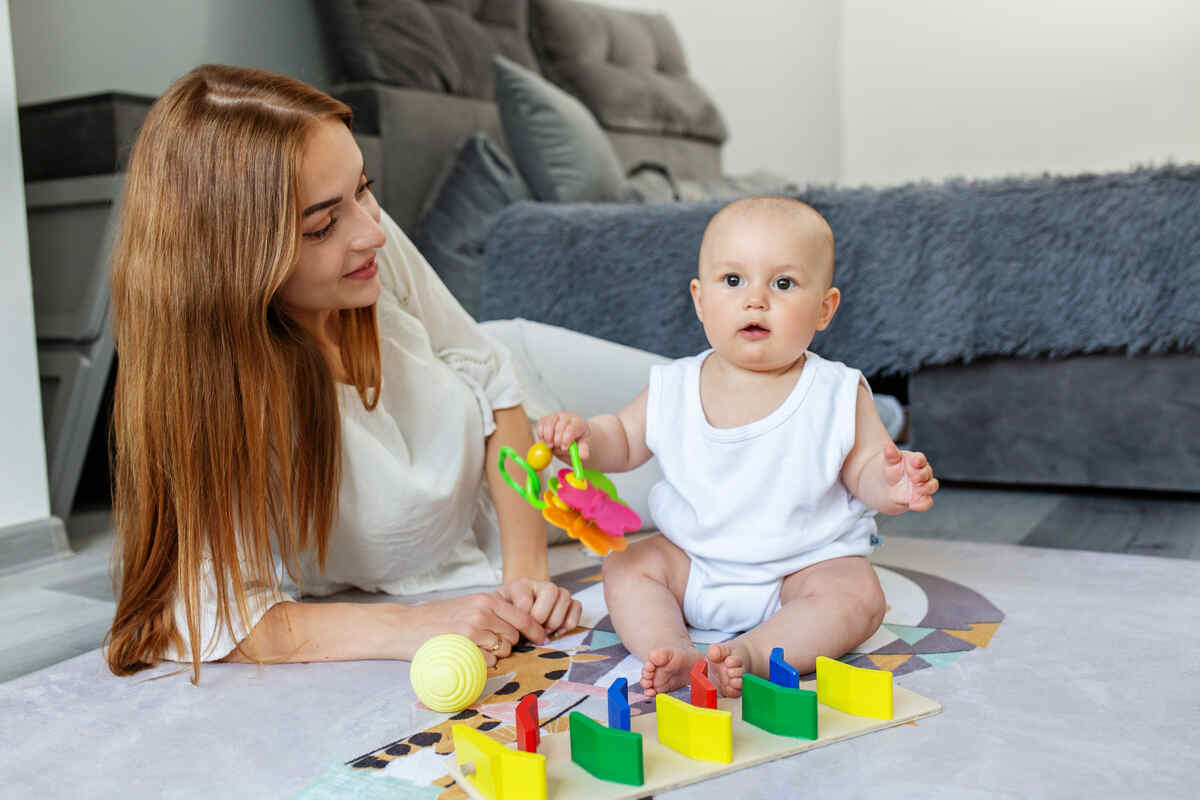
Infant attachment directly drives brain development by providing sensory and emotional input that constructs neural pathways. Responsive exchanges between caregiver and baby reinforce brain circuitry for communication, stress regulation, and early brain architecture.
A baby’s brain develops rapidly during the first years of life, but that development doesn’t happen in isolation. Everyday interactions with caregivers provide social, emotional, and sensory input that can influence how babies learn to process experiences, respond to stress, communicate, connect with others, and construct early brain architecture.
Research on early development consistently points to the importance of responsive relationships. When a baby cries, smiles, reaches, or babbles and an adult responds, those back-and-forth exchanges give the developing brain repeated opportunities to build and strengthen connections.
Early Experiences Help Strengthen Neural Connections
Babies learn through repetition. Each time a caregiver responds to a sound, follows a baby’s gaze, offers comfort, or joins in play, the baby receives information about both the world and the relationship.
Over time, these repeated experiences help support the neural pathways involved in attention, communication, emotional processing, and learning.
These early childhood experiences can have developmental value even when they don’t look like structured learning activities.
Responsive Relationships Support Emotional Development
The brain systems involved in emotion and stress are still developing during infancy. Babies are not born knowing how to calm themselves after every difficult moment.
Responsive caregivers help by offering a steady voice, physical comfort, familiar routines, and predictable reactions. These experiences can support the gradual development of emotional regulation and a stronger sense of security.
Connection Can Help Buffer Stress
Babies naturally experience stress when they are hungry, tired, overstimulated, uncomfortable, or separated from a caregiver. Healthy development doesn’t mean preventing every difficult feeling.
What matters is what happens next. When a trusted adult notices the baby’s distress and responds with comfort and consistency, the baby receives support while moving through that experience. Over time, these repeated patterns can help shape how the child learns to handle stress and recover from it.

What Does Touch Do for a Baby’s Development?
Nurturing touch acts as an immediate signal of safety, supporting sensory integration and nervous system regulation. Combined with eye contact and soft vocal cues, touch helps infants process emotions and build trust long before understanding verbal language.
Touch is one of the earliest ways babies experience connection with another person. Long before they understand words, they can experience the warmth of being held, the rhythm of gentle rocking, and the reassurance of a familiar caregiver’s touch.
Research suggests that nurturing touch can play a role in early social and emotional development. But touch rarely happens alone. When you hold a baby, you may also make eye contact, speak softly, respond to their movements, or adjust what you’re doing based on their cues. Together, these experiences become part of responsive caregiving.
Babies Experience Connection Through Their Senses
An infant is constantly taking in information through touch, sound, sight, smell, and movement. A familiar voice during feeding, gentle rocking before sleep, or a hand resting softly on a baby’s back can combine several of these sensory experiences at once.
These interactions also give caregivers opportunities to notice what the baby is communicating. Does the baby relax and lean closer? Turn their head away? Become more alert? Responsive care means noticing those signals and adjusting accordingly.
Nurturing Touch Can Support Calm and Regulation
When a baby becomes tired, unsettled, or overstimulated, gentle touch can be one way a caregiver helps them settle. Holding, rocking, patting, or stroking may provide soothing sensory input alongside a calm voice and familiar presence.
The goal isn’t to stop every cry immediately. It is to help the baby move through distress with support. These repeated experiences of being comforted are part of how infants begin learning what safety and regulation feel like within a relationship.
Touch Can Communicate Safety and Connection
A baby doesn’t understand attachment as a concept. They experience it through patterns.
“I need comfort, and someone responds.”
“I feel overwhelmed, and someone helps me settle.”
“I reach out, and someone notices.”
Over time, warm and responsive interactions can help build familiarity, trust, and connection. That’s what makes the “science of snuggles” more meaningful than simply saying babies need hugs. The developmental value lies in the responsive relationship surrounding the touch.
Why “Serve and Return” Interactions Matter
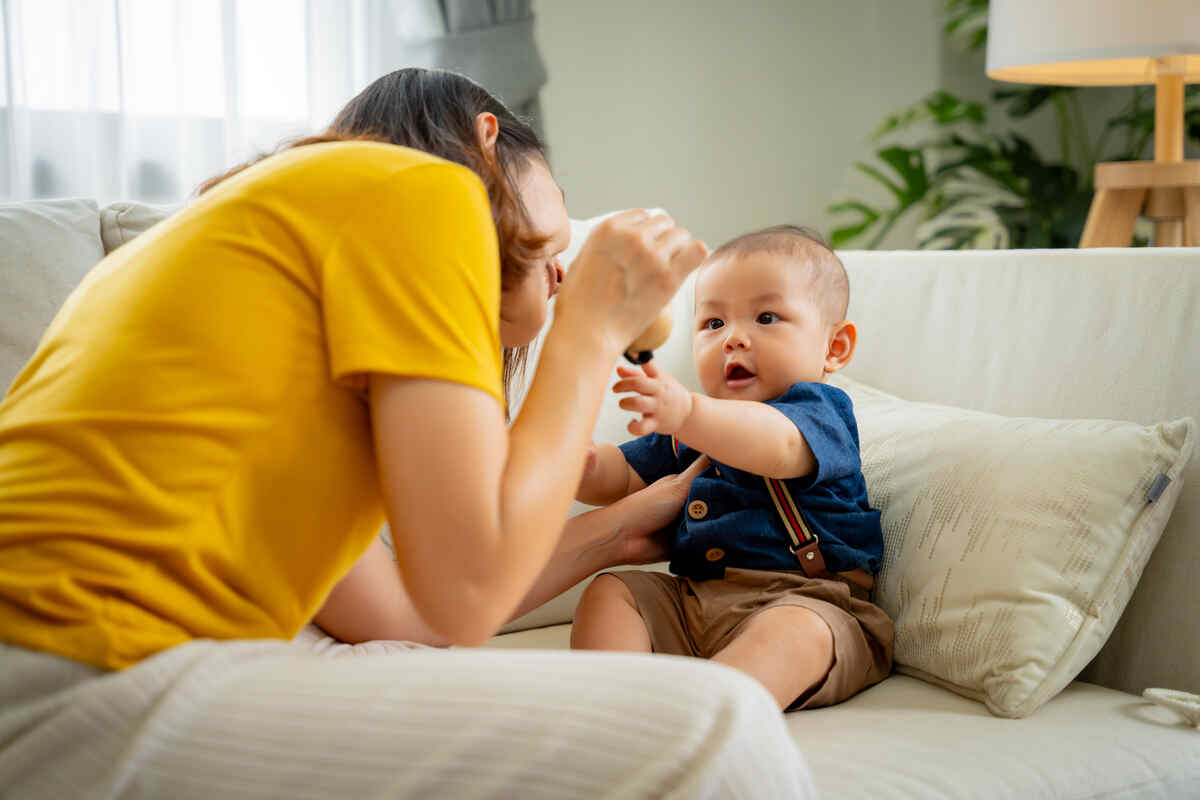
Serve and return interactions occur when a baby signals through gestures or vocalizations and a caregiver responds. Engaging in serve and return interactions reinforces language skills, attention control, and early social learning.
One of the clearest ways to understand responsive caregiving is through the idea of “serve and return.” A baby “serves” by looking, reaching, crying, smiling, babbling, or showing interest in something, and the caregiver “returns” by noticing and responding.
These back-and-forth exchanges may seem simple, but engaging in serve-and-return interactions gives babies repeated opportunities to practice communication, attention, and social connection. Over time, they help infants learn that their signals can lead to a meaningful response from another person.
What Serve and Return Looks Like in Real Life
Serve-and-return interactions happen throughout the day, often without any planning. Your baby might look toward a ceiling fan, and you follow their gaze and say, “You see the fan spinning,” turning a brief moment of attention into a shared experience.
A baby may babble, pause, and wait. When you answer with a sound or a few words and give them space to respond again, you create the rhythm of a real conversation long before they can speak.
The same thing happens when a baby reaches toward you or shows interest in a toy. By noticing the gesture and responding, you reinforce the idea that their actions and expressions have meaning.
Why These Small Exchanges Matter
Serve-and-return interactions can support language, attention, emotional connection, and early social learning. They give babies repeated practice noticing another person, expressing themselves, and experiencing the give-and-take of communication.
These moments can also support healthy brain development because the infant is actively processing sights, sounds, facial expressions, movement, and responses from a trusted adult. The interaction becomes richer because the caregiver is responding to what the baby is already interested in.
The goal isn’t to turn every moment into a developmental exercise. It is to notice your baby’s cues, respond with warmth, and allow the interaction to unfold naturally.
Babies Borrow Our Calm: Understanding Co-Regulation
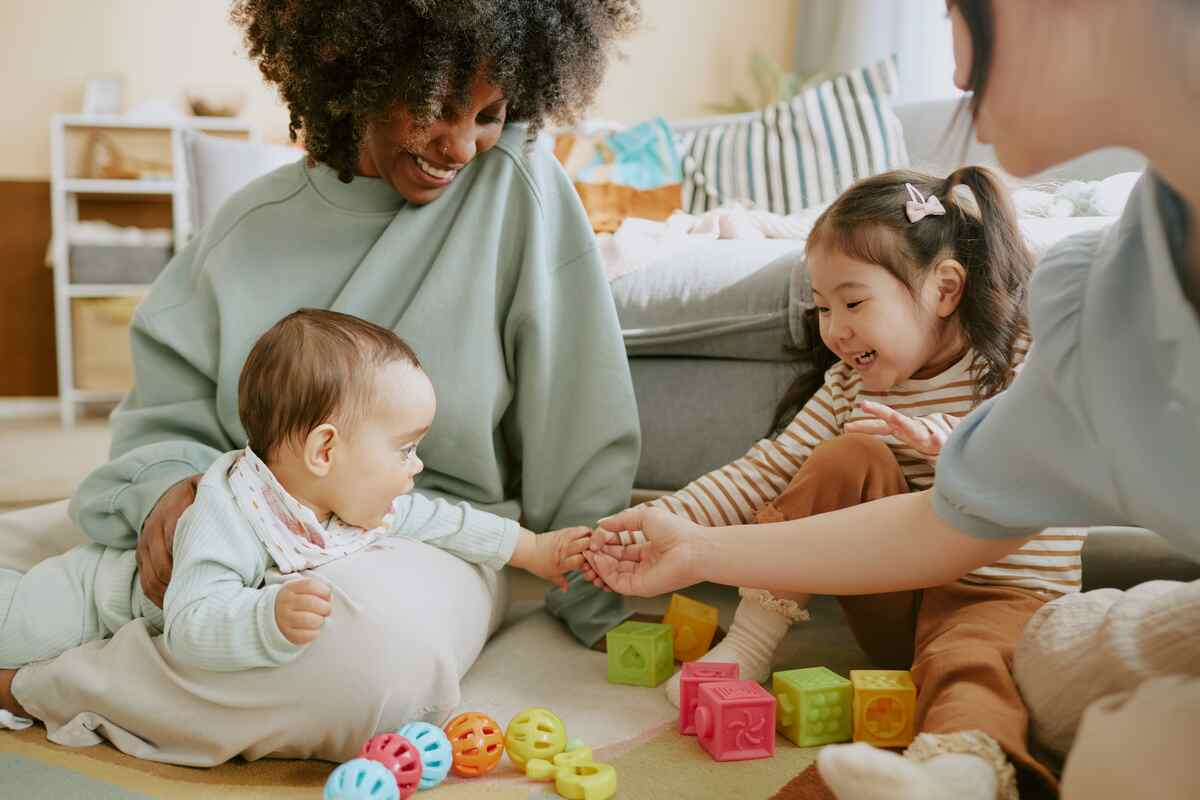
Co-regulation is the process where a caregiver uses physical presence, tone, and touch to help manage an infant’s stress. Because infants lack self-soothing mechanisms, shared regulation supports long-term emotional resilience, in line with research on early attachment and self-regulation.
Babies are not born with the ability to manage strong emotions on their own. When they become tired, hungry, overstimulated, or unsettled, they often depend on a calm and responsive adult to help them return to a more comfortable state.
This process is called co-regulation. It happens when a caregiver uses presence, voice, touch, facial expression, and predictable responses to help a baby manage distress and feel safe again, aligning with research on early attachment and self-regulation.
What Co-Regulation Looks Like
Co-regulation can be as simple as lowering your voice when a baby becomes overstimulated or gently rocking them when they are tired. It can also mean slowing down during a transition, holding them close after a sudden noise, or staying nearby while they gradually settle.
These moments work because the caregiver is responding to the baby’s cues rather than forcing a specific reaction. A calm tone, familiar rhythm, and consistent response can help create a sense of safety when the baby is still learning how to handle strong feelings.
How Co-Regulation Supports Emotional Development
Over time, repeated experiences of being soothed and supported help babies build a foundation for emotional regulation. They begin to experience that difficult feelings can pass and that trusted adults are available to help them through those moments.
This doesn’t mean caregivers should prevent every cry or uncomfortable feeling. The goal is to provide enough support that the baby can move through distress without being left to manage it alone.
As children grow, the support they need changes gradually. The early experience of being regulated within a relationship helps create a foundation for the self-regulation skills they will continue developing throughout childhood.

Feeling Safe Gives Babies Confidence to Explore
A secure attachment relationship serves as a safety net, enabling infants to confidently explore their environment and learn. Having a reliable base encourages independent play, problem-solving, and cognitive curiosity.
Attachment isn’t about keeping a baby close every moment. A secure relationship can give babies the confidence to turn their attention outward, explore what is around them, and return to a trusted caregiver when they need reassurance.
In attachment research, this is often described as having a “secure base.” When babies experience a caregiver as dependable and responsive, they can use that relationship as a source of safety while gradually becoming more curious about their surroundings.
A Secure Base Supports Exploration
You can see this process during ordinary play. A baby may crawl toward an unfamiliar toy, stop to look back at a caregiver, and then continue exploring after seeing that familiar face nearby.
As mobility increases, these small adventures become more frequent. Babies reach, crawl, touch, listen, watch other people, and investigate new objects while moving between exploration and connection with the adults they trust.
Exploration Creates Opportunities for Learning
Exploration gives babies opportunities to practice skills across several areas of development. Reaching for a toy can involve coordination and problem-solving, while watching another person can build social awareness, and listening to a caregiver name an object can support early language development.
This is why nurturing relationships and early learning are closely connected rather than competing priorities. When babies feel supported enough to explore, curiosity can grow alongside their emotional sense of security.
A loving caregiver doesn’t need to direct every discovery or turn play into a lesson. Sometimes the most valuable role is simply to provide a safe, responsive presence while giving the baby room to explore at their own pace.

Does More Affection Always Mean Better Development?
The developmental impact of affection relies on quality and responsiveness rather than constant physical contact. Attending to an infant's individual cues ensures connection without overwhelming their sensory boundaries.
Affection matters, but healthy development isn’t a simple equation where more touch automatically produces better outcomes. What matters more is whether affection is responsive, appropriate, and connected to what the baby is communicating in that moment.
Some babies seek frequent physical closeness, while others may turn away, stiffen, fuss, or need a little space when they become overstimulated. Responsive caregiving means noticing those cues and adjusting rather than assuming every baby needs the same kind or amount of contact.
Follow the Baby’s Cues
A baby’s signals can tell you a great deal about what they need. Leaning in, reaching, relaxing against you, or making eye contact may suggest they are comfortable with the interaction, while looking away, arching, or becoming fussy may be signs that they need a break.
The goal isn’t to force connection. It is to stay attentive enough to respond in a way that helps the baby feel understood and supported.
Connection Doesn’t Require Perfection
Parents don’t need to respond perfectly every time for attachment to develop in a healthy way. Missed cues, delayed responses, and difficult moments are part of real family life, especially when parents are balancing work, routines, and everything else that comes with caring for a young child.
What matters is the overall pattern of the relationship. When warmth, responsiveness, and reconnection happen consistently over time, babies can continue building trust even when every interaction isn’t ideal.
This is an important reminder for parents who already feel pressure to “get everything right.” Healthy attachment grows through repeated experiences of connection, not through perfect performance.

What Responsive Care Looks Like During an Ordinary Day
Responsive care fits naturally into standard daily routines, such as feedings, diaper changes, and drop-offs. Consistent, attentive interactions throughout the day give babies a predictable and supportive environment.
It doesn’t require a special schedule or a list of developmental activities. It often happens during the routines that are already part of a baby’s day, when a caregiver notices a cue and responds with warmth, consistency, and attention.
Morning
The day may begin with feeding, getting dressed, and preparing to leave the house. These ordinary routines can become moments of connection through eye contact, a calm voice, gentle touch, and simple conversation about what’s happening.
A baby who seems sleepy, hungry, playful, or unsettled may need a different kind of response each morning. Paying attention to those signals helps the routine feel more predictable and supportive.
Goodbye
Separations can be difficult, especially when a baby is tired or adjusting to a new routine. A calm and consistent goodbye can help create familiarity, even if the baby still becomes upset when a parent leaves.
The goal isn’t to prevent every tear. It is to make the transition feel predictable and to ensure the baby is supported by a trusted caregiver who can respond with reassurance and comfort.
During Childcare
Responsive care continues throughout the day through feeding, diaper changes, play, rest, and transitions. A caregiver may notice that a baby needs a quieter space, wants to engage with a toy, is ready for sleep, or needs extra reassurance after becoming unsettled.
These repeated interactions can help babies feel known and understood. For parents, consistent communication with caregivers can also make it easier to share routines, preferences, and cues that support continuity between home and childcare.
Reunion
When parents return, babies may respond in different ways. Some reach out immediately, while others may need a few moments to shift their attention and settle into the transition.
A warm reunion gives both parent and baby time to reconnect without forcing a particular reaction. Following the baby’s lead can make the moment feel more natural and reassuring.
Evening
Bath time, feeding, floor play, stories, and bedtime all create simple opportunities for connection. Talking, smiling, cuddling, and responding to a baby’s attention can turn familiar routines into meaningful back-and-forth interaction.
The important point is that responsive care doesn’t have to be added on top of an already busy day. It can grow naturally from the everyday moments parents and caregivers are already sharing with the baby.

Practical Ways to Support Secure Attachment and Healthy Development
Practicing responsive care involves clear, everyday habits that signal safety and support to a growing baby, in line with CDC positive parenting guidelines.
Supporting secure attachment doesn’t require complicated routines. The most helpful habits are often simple, repeatable ways of showing a baby that their signals matter and that trusted adults are available when they need support.
Notice and respond to your baby’s cues. Pay attention to signs of hunger, fatigue, curiosity, discomfort, and interest, then adjust your response to what your baby seems to need.
Use eye contact, facial expressions, and conversation. Babies learn from watching faces, hearing voices, and experiencing the rhythm of back-and-forth interaction.
Offer nurturing touch when your baby welcomes it. Holding, rocking, cuddling, or gently patting can support connection when they are responsive to the baby’s signals.
Create predictable routines. Familiar patterns around feeding, sleep, transitions, and play can help babies know what to expect and make everyday experiences feel more secure.
Follow your baby’s attention during play. If they become interested in a sound, toy, face, or movement, join them there instead of redirecting the moment too quickly.
Comfort distress rather than expecting early independence. Babies are still developing the ability to regulate strong feelings, so calm support from an adult remains an important part of that process.
Allow safe exploration while staying available. Give babies space to investigate their surroundings while remaining close enough to offer reassurance when they look back or need help.
Choose caregivers who are warm and responsive. Babies can build meaningful relationships with more than one consistent caregiver, especially when those adults respond sensitively and predictably.
Share routines and cues with other caregivers. Letting caregivers know how your baby signals hunger, fatigue, overstimulation, or comfort can support greater consistency between home and childcare.
Focus on connection, not perfection. Secure attachment develops through repeated patterns of warmth, responsiveness, and reconnection over time, not through getting every interaction exactly right.

What Parents Should Remember About Attachment and Brain Development
Consistent, warm caregiving establishes the environment in which infant brain development thrives. Parents and multiple trusted caregivers build secure bonds through daily connection and responsive routines, rather than flawless execution.
Babies develop within relationships. The way trusted adults respond, comfort, communicate, and connect becomes part of the environment in which an infant’s emotional, social, and brain development unfolds.
That doesn’t mean one cuddle, one difficult separation, or one missed cue determines a child’s development. What matters is the broader pattern of responsive care that babies experience over time, including moments when caregivers notice their needs, help them through distress, and share their curiosity about the world.
For parents balancing work and family life, this is an important distinction. Supporting attachment isn’t about being physically present every minute or trying to make every interaction perfect. Babies can experience nurturing relationships with multiple consistent caregivers while continuing to build a strong connection with their parents.
The moments that support those relationships are often remarkably ordinary. A cuddle after a cry, a smile returned across the room, a familiar voice during feeding, or a caregiver who notices when a baby needs a quieter moment can all become part of a larger pattern of safety and connection.
When babies repeatedly experience that kind of care, they gain more than comfort in the moment. They are building relationships in which they can feel secure enough to connect, recover from difficult moments, explore, and learn.
Small Moments Build Strong Foundations
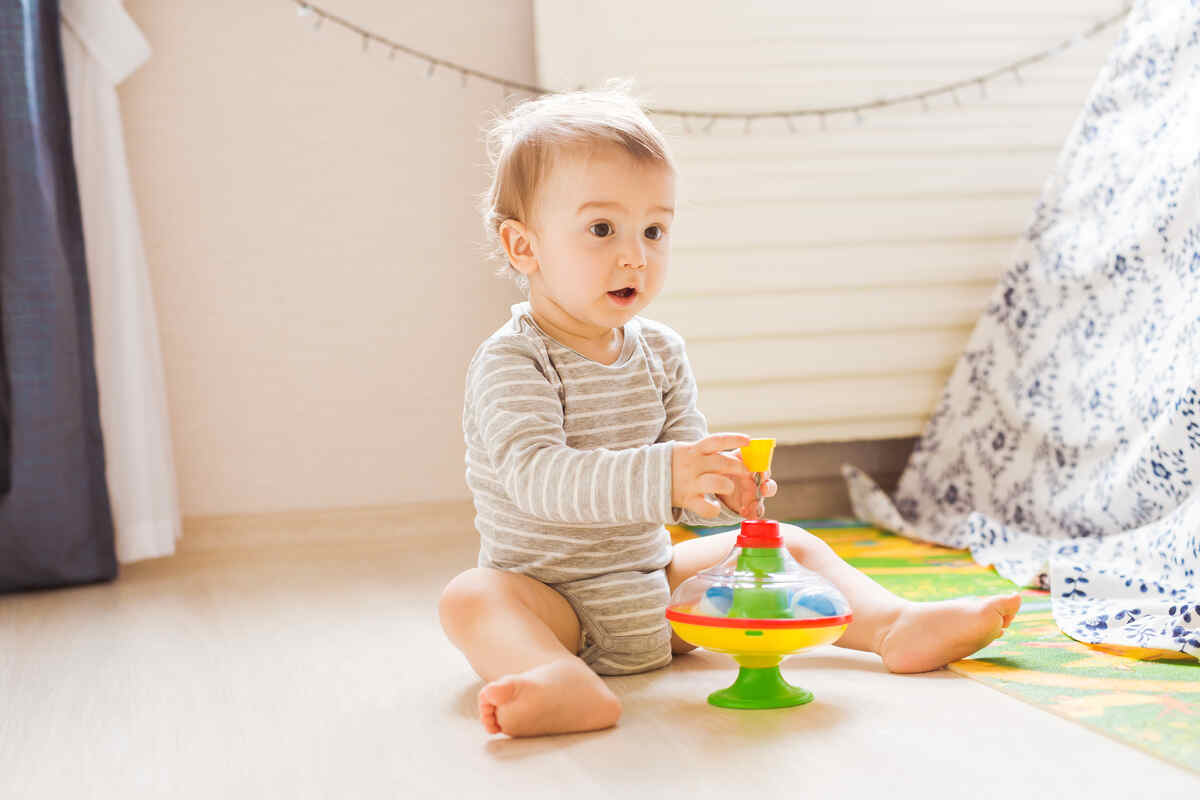
Infant attachment and brain development grow through everyday moments of responsive care. A comforting touch, familiar voice, shared smile, or calm response can help babies experience the safety and connection they need as they learn, explore, and develop.
At Sugar N Spice Daycare & Kindergarten, our nurturing environment provides the consistent, responsive care your infant needs for optimal brain and emotional development. As your child grows, explore how our dedicated team supports their journey by reading about understanding big emotions in little ones, or contact Sugar N Spice today to schedule a tour and see our attachment-focused care in action.

Enroll Your Child Today
Sugar N Spice Day Care & Kindergarten is proudly accepting new enrollees. Call our day care center today to hear more about our early childhood education opportunities or to schedule a tour.

2026 © Sugar N Spice Day Care & Kindergarten, LLC, All rights reserve
Privacy Policy | Terms and Conditions
Powered by Kyrios Systems